
Resource Library
Welcome to the East Coast Environmental Law Resource Library. Here, you can find a wide range of resources on environmental law issues throughout Atlantic Canada.
Explore our FAQs to learn more about our Resource Library and what it contains.
If you want accessible learning materials on general topics, try searching our Summary Series first to see if we have a guide or toolkit that meets your needs.
Have a question that isn’t answered by our existing guides and toolkits? Submit an Environmental Law Inquiry by using our Inquiry Intake Form.

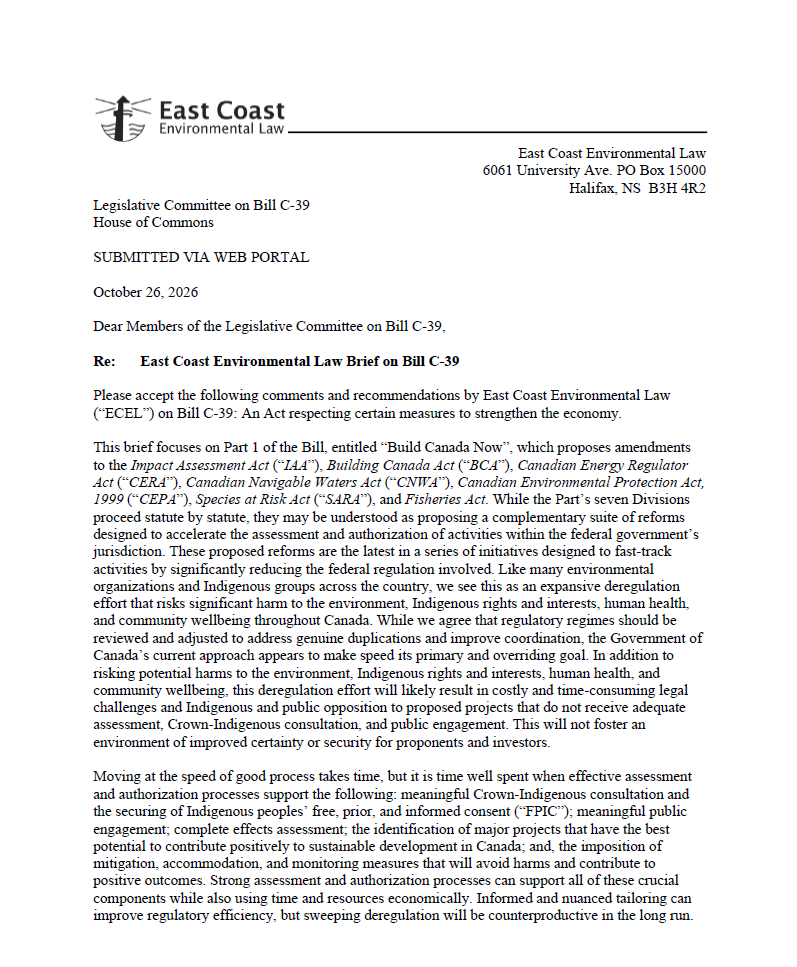
Submission to the Legislative Committee on Bill C-39
Moving at the speed of good process takes time, but it is time well spent when effective assessment and authorization processes support the following: meaningful Crown-Indigenous consultation and the securing of Indigenous peoples’ free, prior, and informed consent (“FPIC”); meaningful public engagement; complete effects assessment; the identification of major projects that have the best potential to contribute positively to sustainable development in Canada; and, the imposition of mitigation, accommodation, and monitoring measures that will avoid harms and contribute to positive outcomes. Strong assessment and authorization processes can support all of these crucial components while also using time and resources economically. Informed and nuanced tailoring can improve regulatory efficiency, but sweeping deregulation will be counterproductive in the long run.

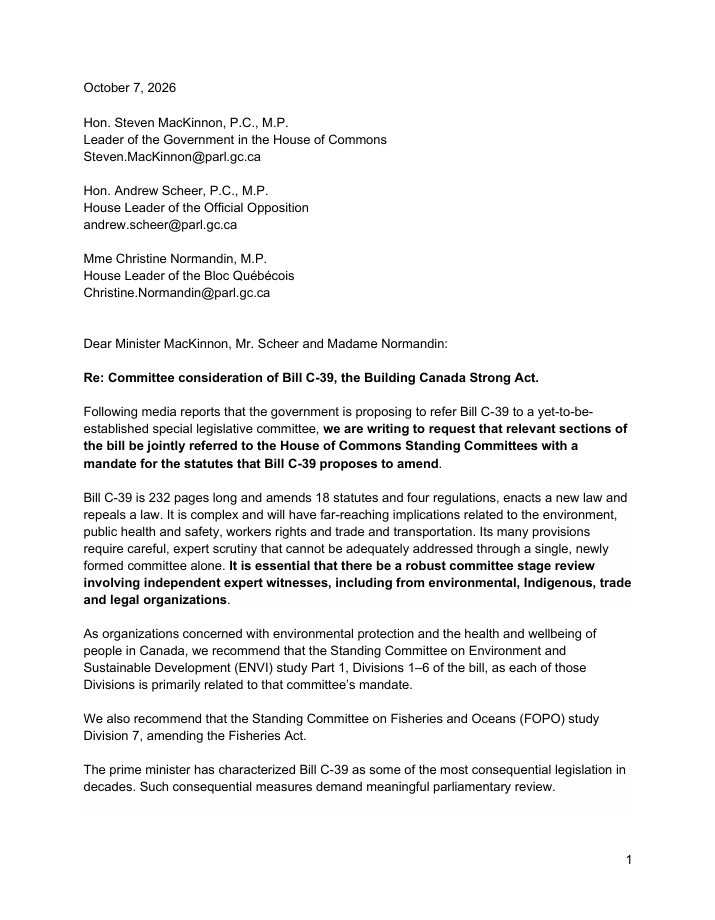
Joint Letter to House Leaders on Committee Consideration of Bill C-39, the Building Canada Strong Act
Bill C-39 is 232 pages long and amends 18 statutes and four regulations, enacts a new law and repeals a law. It is complex and will have far-reaching implications related to the environment, public health and safety, workers rights and trade and transportation. Its many provisions require careful, expert scrutiny that cannot be adequately addressed through a single, newly formed committee alone.

Impact Assessment Act Report
In this report, implementation of the IAA is compared to 12 “essential elements of next generation environmental assessment” established by leading Canadian experts and thought leaders.2
Findings are based on a detailed analysis that compares IAA implementation against key indicators under each of these 12 elements.
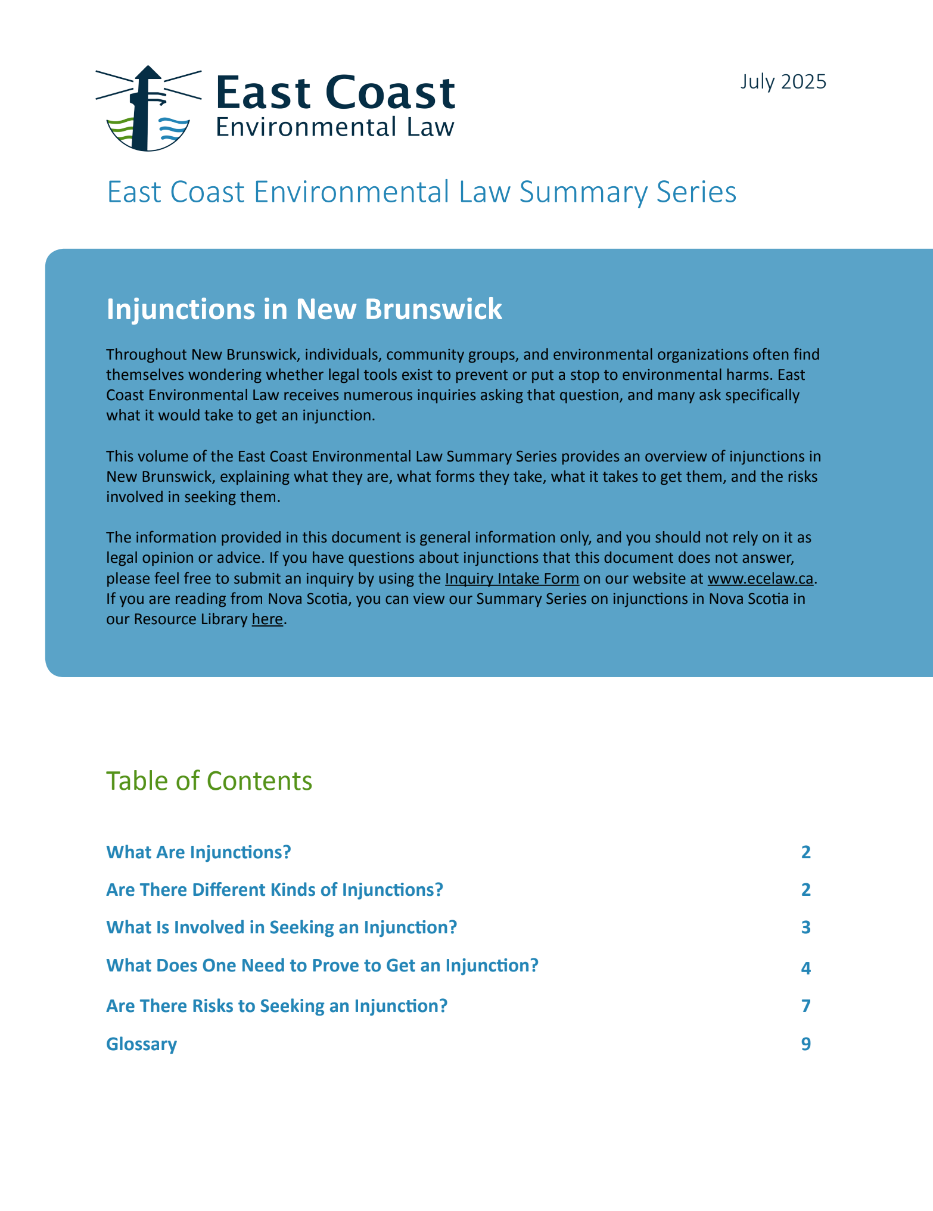
Our Summary Series
Welcome to our signature Summary Series—your first step to becoming more informed about environmental laws in Atlantic Canada.



Featured Library Resources
Check out some of our latest research reports, guides, and law reform papers.