
Resource Library
Welcome to the East Coast Environmental Law Resource Library. Here, you can find a wide range of resources on environmental law issues throughout Atlantic Canada.
Explore our FAQs to learn more about our Resource Library and what it contains.
If you want accessible learning materials on general topics, try searching our Summary Series first to see if we have a guide or toolkit that meets your needs.
Have a question that isn’t answered by our existing guides and toolkits? Submit an Environmental Law Inquiry by using our Inquiry Intake Form.
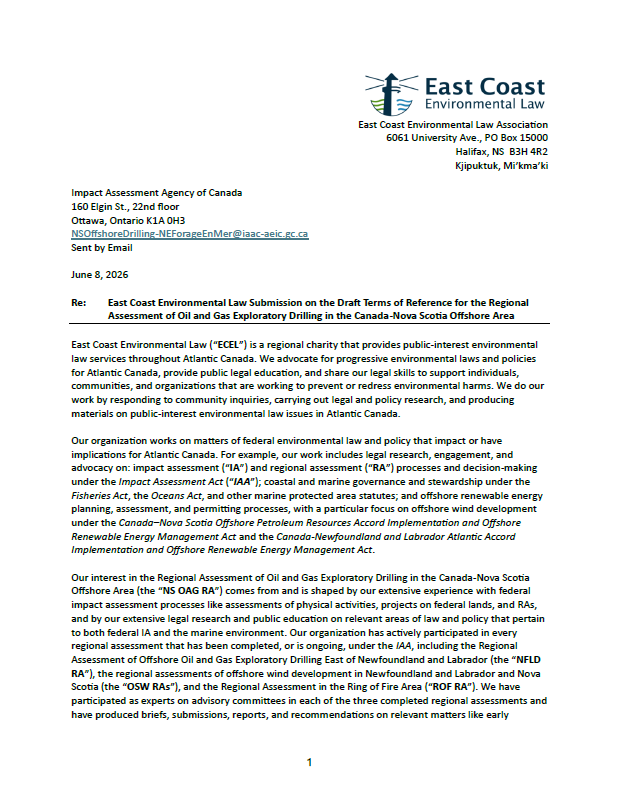
Submission on the Draft Terms of Reference for the Regional Assessment of Oil and Gas Exploratory Drilling in the Canada-Nova Scotia Offshore Area
Ideally, RAs will be used to contribute regional-scale cumulative effects assessments and enhance our collective understanding of how projects and activities contribute to long-term sustainability in the face of the climate emergency, extinction-level biodiversity loss, and global pollution. Used appropriately and effectively, regional assessment is a valuable—even essential—tool to facilitate early planning, consultation, engagement, and scientific study, which will make future, project-level planning and assessment processes more rigorous, consistent, and predictable.
Our Summary Series
Welcome to our signature Summary Series—your first step to becoming more informed about environmental laws in Atlantic Canada.

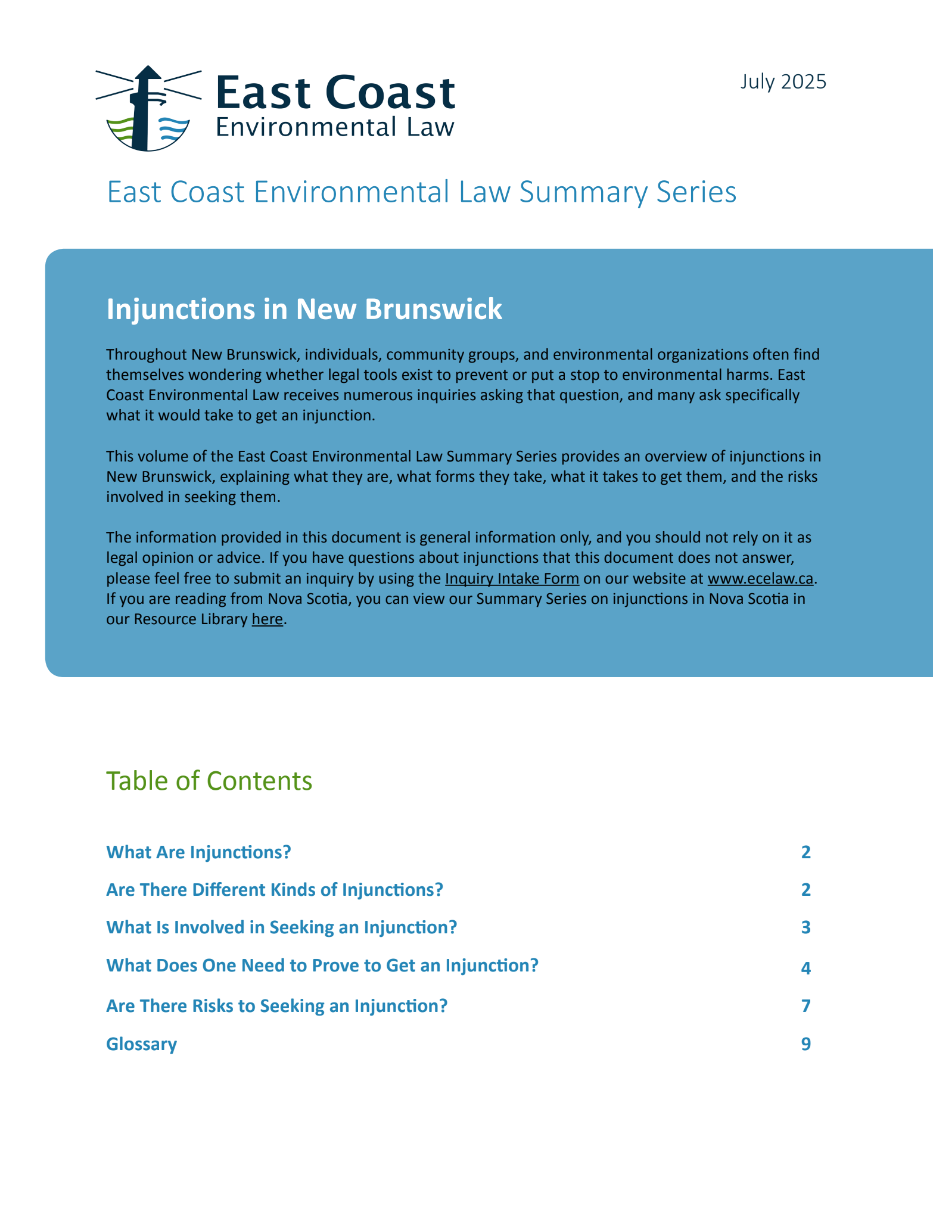
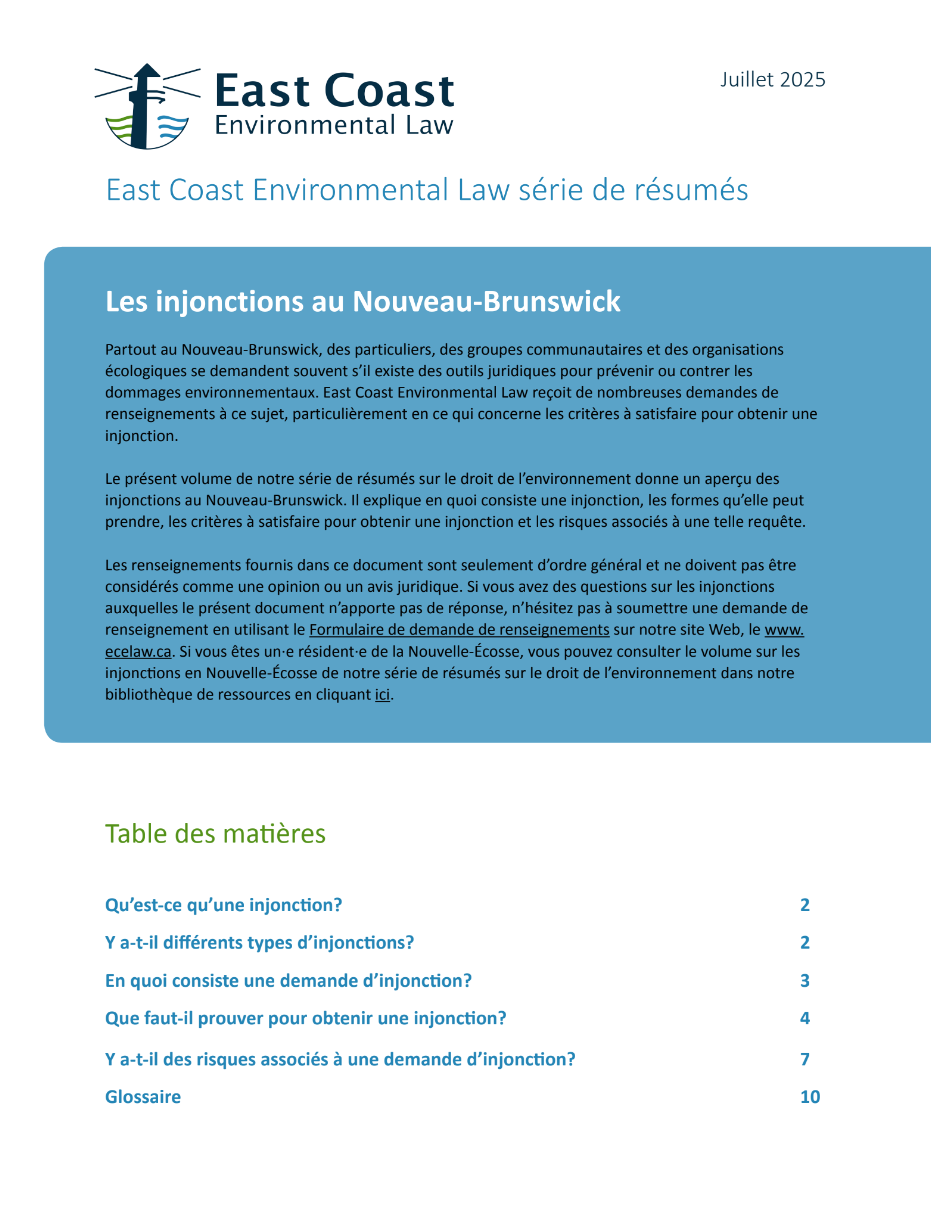


Featured Library Resources
Check out some of our latest research reports, guides, and law reform papers.